Biggest Viltrox AF 50mm F2 Air Buying Mistakes (And How to Avoid Them)
The photography world is often dominated by a "more is more" philosophy. Photographers frequently find themselves chasing the widest apertures, the heaviest glass, and the most complex optical constructions. However, the Viltrox AF 50mm F2 Air represents a sharp pivot toward minimalism, portability, and value. Designed specifically for full-frame mirrorless systems like the Sony E-mount and Nikon Z-mount, this lens has garnered significant attention for its ultra-lightweight "Air" designation. Yet, despite its accessible price point and appealing specifications, many photographers fall into specific traps when adding this lens to their kit.
Buying a lens based solely on a spec sheet or a single glowing review is a recipe for buyer's remorse. The Viltrox 50mm F2 Air is a niche product that excels in specific environments but may lag in others. Understanding the nuances of its performance, build quality, and ergonomic trade-offs is essential for any photographer looking to make a smart investment. This article explores the most common mistakes buyers make when considering this lens and provides a comprehensive guide on how to evaluate it against your specific photographic needs.
Analysis of the Viltrox AF 50mm F2 Air
The Viltrox AF 50mm F2 Air is part of a new wave of budget-friendly, high-performance optics coming from third-party manufacturers. Its primary selling point is its weight—or lack thereof. Coming in at approximately 140 to 150 grams depending on the mount, it is one of the lightest autofocus primes available for full-frame systems. The lens features an STM (Stepping Motor) for quiet and relatively quick autofocus, and its optical design includes several elements to minimize chromatic aberration and distortion.
While an f/2 aperture may seem modest compared to the ubiquitous f/1.8 alternatives found in many brand-name lineups, the Viltrox manages to maintain a compact form factor that is significantly smaller than most f/1.8 primes. The "Air" branding is not just marketing; it reflects a design philosophy aimed at street photographers, travelers, and content creators who prioritize a low-profile setup. However, this lightweight design necessitates some sacrifices in materials, often using high-quality plastics for the barrel and focusing ring, though it typically retains a metal mount for durability.
Mistake #1: Underestimating the Impact of f/2 vs. f/1.8
One of the most frequent errors buyers make is assuming that the difference between an f/2 and an f/1.8 aperture is negligible. While it is true that from a purely exposure-based perspective, the difference is only about a third of a stop, the impact on depth of field and bokeh quality can be more pronounced than the numbers suggest. Buyers often purchase the Viltrox 50mm F2 Air for portraiture, only to find that it lacks that "ultra-creamy" background blur they associate with 50mm primes.
To avoid this mistake, it is crucial to recognize the intended use case. If your primary goal is high-end studio portraiture where razor-thin depth of field is the signature look, you may find the f/2 aperture slightly limiting. However, if you are a street photographer who frequently shoots at f/2.8 or f/4 to ensures enough of the scene is in focus, the "limitation" of f/2 is entirely irrelevant. The Viltrox 50mm F2 Air is designed for balance, not bokeh maximization. Understanding exactly how much blur you need for your style of work will prevent you from feeling like you settled for a slower lens.
Mistake #2: Overlooking the Minimalist Build Quality
When Viltrox labeled this the "Air" series, they were transparent about the lightweight construction. A common mistake is expecting the tactile feel of a professional-grade, all-metal lens like the Viltrox Pro series or a Sony G Master. Some buyers are disappointed by the lightweight, "plasticky" feel of the 50mm F2 Air, equating light weight with poor quality.
In reality, modern engineering plastics are incredibly durable and resistant to impact. The mistake here is a psychological one—associating weight with value. To avoid this, consider your physical comfort during long shooting days. If you are hiking ten miles or walking through a city for eight hours, that 150g weight becomes a massive advantage. Focus on the metal lens mount, which ensures a secure and long-lasting connection to the camera body, rather than the tactile sensation of the barrel. If you prefer a heavy, robust-feeling lens, the Air series is simply not designed for you, and recognizing that before the purchase is key.
Shop the latest Cameras & Photography picks on Amazon.
Browse Now →Pros and Cons
- Pro: Extreme Portability. The lens is so light and small that it can easily fit into a jacket pocket, making it an ideal "always-with-you" lens for spontaneous photography.
- Pro: Value for Money. It offers impressive optical performance and reliable autofocus at a fraction of the price of first-party alternatives.
- Pro: Fast and Quiet AF. The STM motor is excellent for both stills and video, providing smooth transitions without the jerky movements or loud clicking sounds found in older budget lenses.
- Pro: Minimal Distortion. For a lens in this price bracket, the geometric distortion is well-controlled, requiring very little correction in post-processing.
- Con: Modest Aperture. An f/2 maximum aperture is slower than the more common f/1.8 found in competitors' entry-level primes.
- Con: Lack of Weather Sealing. Most versions of this lens do not feature extensive weather gaskets, making it less suitable for shooting in heavy rain or dusty environments.
- Con: Simplified Controls. To save weight and cost, the lens often lacks physical switches for AF/MF or a customizable function button.
Mistake #3: Ignoring the Video Performance Nuances
Modern mirrorless users are often "hybrid" shooters, moving between stills and video. A mistake many buyers make is failing to check for "focus breathing"—the slight change in focal length that occurs when the lens focuses from a near object to a far one. While the Viltrox AF 50mm F2 Air is generally competent in video, some users find that the breathing is more noticeable than on more expensive lenses specifically optimized for cinema.
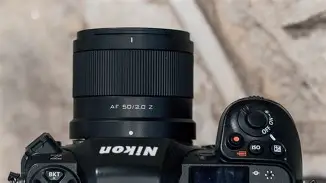
Additionally, the lack of an aperture ring on this specific model means you must control the iris through the camera dial. For certain videographers who prefer tactile, de-clicked aperture control, this is a significant drawback. To avoid this mistake, identify your video priorities. If you are vlogging or doing light documentary work, the STM motor's silence will be your best friend. If you are doing precise narrative work with complex focus pulls, you should test the lens's breathing characteristics to ensure they meet your aesthetic standards.
Comparison with Competing 50mm Primes
| Feature | Viltrox AF 50mm F2 Air | Sony FE 50mm f/1.8 | Nikon Z 50mm f/1.8 S |
|---|---|---|---|
| Weight | approx. 145g | 186g | 415g |
| Max Aperture | f/2 | f/1.8 | f/1.8 |
| AF Motor | STM (Silent) | DC Motor (Noisy) | Stepping Motor (Silent) |
| Typical Use | Travel, Street, Casual | Budget Portraits | Professional Workflow |
| Build Material | Plastic/Metal Mount | Plastic/Metal Mount | High-grade Composite/Metal |
Mistake #4: Not Considering the "Air" Concept in Relation to Body Size
A lens does not exist in a vacuum; it is part of a system. A recurring mistake is pairing the Viltrox 50mm F2 Air with a large, gripped professional body like a Nikon Z9 or a Sony A1 with a vertical grip. While the lens will work perfectly fine, the ergonomics can feel "front-heavy" in reverse—meaning the camera body is so much heavier than the lens that the balance feels awkward in the hand.
The 50mm F2 Air is most at home on compact bodies like the Sony A7C series or the Nikon Z5/Z6. On these smaller frames, the lens keeps the entire package nimble…
Mistake #5: Setting Unrealistic Expectations for Sharpness at f/2
While third-party lenses have improved dramatically, no lens is perfect. A common mistake is expecting edge-to-edge tack-sharpness at the maximum aperture of f/2. In many budget lenses, wide-open performance can be slightly soft in the corners or exhibit some color fringing (chromatic aberration) in high-contrast scenes. While the Viltrox is surprisingly sharp in the center at f/2, it reaches its peak performance when stopped down to f/2.8 or f/4.
Buyers who only ever shoot wide open and then zoom in to 400% on the corners of their images may be disappointed. To avoid this mistake, understand that for the vast majority of applications—social media, journalism, and even large prints—the center sharpness is what truly matters. If your work requires absolute corner-to-corner perfection at wide apertures (such as for specialized astrophotography or architectural work), you may need to invest three to four times the price of the Viltrox to get that extra 5% of performance.
Buying Guide: Is the Viltrox 50mm F2 Air Right for You?
Before purchasing, ask yourself the following questions to ensure you are making the right choice. This lens is a specific tool designed for a specific type of photographer.
What is your primary subject matter?
If you shoot street photography, environmental portraits, or daily life, the 50mm focal length is a classic for a reason. The f/2 aperture provides enough light gathering for most indoor situations and offers a pleasant separation from the background. However, if you are a dedicated sports or wildlife photographer, 50mm is likely too wide, and the f/2 aperture may not be fast enough for high-speed action in low light.
Looking for the best Cameras & Photography deals on Amazon?
View Offers →How much does kit weight matter to you?
This is the "make or break" question for the Air series. If you often leave your camera at home because it feels like a chore to carry, the Viltrox 50mm F2 Air is a game-changer. It transforms a bulky full-frame camera into something that feels much more manageable. If weight isn't a concern for you, the justification for choosing this over a slightly faster f/1.8 lens becomes much thinner.
Do you shoot in harsh environments?
Since the Viltrox AF 50mm F2 Air lacks comprehensive weather sealing, it is not the best choice for beach photography (where sand and salt spray are issues) or shooting in the rain. If your photography takes you into the elements, you must be prepared to protect the lens with a cover or choose a more robust, weather-sealed alternative. Ignoring this environmental factor is a mistake that could lead to a damaged lens.
Are you comfortable with firmware updates?
One of the perks of Viltrox lenses is that they usually include a USB-C port on the lens mount for firmware updates. This allows the manufacturer to improve autofocus compatibility as new camera bodies are released. A common mistake is neglecting these updates and then complaining about autofocus performance. Buyers should be comfortable with the idea of occasionally plugging their lens into a computer to ensure it is running the latest software.
Avoiding the "Third-Party Bias" Trap
Finally, many photographers make the mistake of assuming that if a lens doesn't have "Sony" or "Nikon" written on the front, it isn't "professional." In the current market, this bias is increasingly unfounded. Viltrox has proven that they can produce glass that rivals first-party options in many key areas. The mistake here is overpaying for a brand name when the Viltrox 50mm F2 Air could provide 90% of the performance for 40% of the cost. Do not let "gear snobbery" prevent you from owning a lens that might actually make you more productive because it's easier to carry and use.
Conclusion
The Viltrox AF 50mm F2 Air is a masterclass in compromise—in the best possible sense. It makes deliberate trade-offs in aperture and materials to achieve a level of portability and price that is rare in the full-frame mirrorless market. The biggest mistakes buyers make stem from a lack of clarity regarding their own needs. If you expect a heavy-duty, f/1.2 bokeh monster, you will be disappointed. But if you see this lens for what it is—a sharp, silent, and incredibly light companion for everyday shooting—it becomes one of the most logical additions to any camera bag.
By avoiding the pitfalls of overestimating bokeh needs, underestimating the value of light weight, and ignoring ergonomic balance, you can ensure that the Viltrox 50mm F2 Air serves you well. It is a lens that encourages you to take your camera out more often, and at the end of the day, the best lens is the one you actually have with you when the perfect shot appears. Focus on the use cases where this lens shines: travel, street, and casual documentation. When used within its intended design parameters, it isn't just a budget lens; it's a powerful tool for visual storytelling.