Don't Buy the Msi Mpg 272Urx Qd Oled Monitor Until You Read This Full Analysis
Introduction
The MSI MPG 272URX QD OLED is one of the newer entries in the competitive 27-inch monitor category that promises the next-generation color and contrast performance of quantum‑dot OLED technology in a gaming‑oriented package. For buyers who care about color fidelity, deep blacks and responsive gaming performance, a QD‑OLED monitor can look like a no‑brainer — but real world purchases involve tradeoffs beyond the headline specs. This analysis walks through the strengths, limitations, and buying considerations that matter to different users so a purchase decision is informed and practical.
At a glance: what this monitor is trying to deliver
MSI positions the MPG 272URX QD OLED as a hybrid monitor aimed at gamers who also do creative work: a compact 27‑inch form factor, a QD‑OLED panel for higher color volume and contrast, plus gaming features such as high refresh support and adaptive sync. That combination can be compelling, but it also raises typical questions buyers ask: How bright is the HDR? Will the OLED panel burn in for mixed use? Is the ergonomic design suitable for long editing sessions? Does it offer the right connectivity for multi‑device setups?
Detailed product review and analysis
Design and build
The visual and mechanical design of the MPG 272URX follows MSI’s gaming heritage: angular stand, compact footprint, and visible accenting that can include RGB elements on some MPG models. The stand usually provides height, tilt and swivel adjustments and the VESA mount option remains standard for those who prefer an arm. Build quality is typically solid for the MSRP tier this model targets, though some buyers note that the plastic finish can show fingerprints and that the base takes up desk space compared with slimmer stands or clamp arms.
Panel and image quality
QD‑OLED combines quantum‑dot color enhancement with OLED self‑emissive pixels, delivering the characteristic infinite contrast and excellent off‑axis viewing of OLED panels with a wider color volume than traditional WOLEDs. In practical terms this means:
- Very deep blacks and excellent perceived contrast in dim and mixed lighting.
- Vivid, saturated colors that better maintain saturation at higher luminance levels compared with many OLED predecessors.
- Wide viewing angles with minimal color shift, useful for collaborators and multi‑person viewing.
However, buyers should be aware that the best results depend on factory calibration and quality control. Out of the box, color settings often need adjustment for professional work, and there can be unit‑to‑unit variation in uniformity (minor tint or brightness differences across the panel).
Color accuracy and creative work
For photographers, video editors and designers, the important metrics are gamut coverage (sRGB, DCI‑P3), grayscale tracking, uniformity and the ability to hold calibration over time. QD‑OLED panels generally offer strong coverage of wide color spaces such as DCI‑P3, making them attractive for HDR workflows. That said, the MPG series is primarily marketed to gamers — calibrators should check whether the monitor supports hardware LUTs or professional calibration workflows. If absolute color accuracy and validated factory calibration are required, users should compare measured values or consider monitors sold specifically for content creation with calibration reports.
HDR and brightness
OLED’s ability to switch pixels off individually allows excellent local contrast, which benefits HDR representation for small bright highlights on a dark background. The tradeoff is peak brightness: many OLED panels do not reach the same sustained peak luminance as high‑end mini‑LED LCDs. The MSI MPG 272URX QD OLED will likely excel at delivering punchy HDR highlights and spectacular black levels in media with mixed bright/dark content, but buyers who want sustained, very high nit levels across large bright scenes should temper expectations.
Gaming performance and responsiveness
Gaming is a core focus of the MPG line. QD‑OLED’s pixel response times are often faster than equivalent LCD panels, leading to reduced motion blur and crisp fast motion. Combined with high refresh rates and adaptive sync (variable refresh), competitive and immersive gaming both benefit. Input lag is typically low, and MSI tends to include gaming‑centric OSD features such as crosshairs, FPS counters and customizable profiles. Gamers should verify the exact refresh rate and whether the monitor supports the full bandwidth needed for the highest refresh at the chosen resolution — this is particularly important if the buyer wants to drive the panel at very high refresh rates from an external console or laptop over HDMI/DisplayPort.
Connectivity and extras
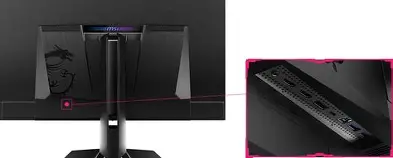
MSI monitors often include a useful selection of ports: DisplayPort, multiple HDMI, USB‑A downstream ports and possibly a USB‑C with power delivery on higher tier models. Buyers should check the available ports and whether the USB hub supports their peripherals. Some MPG models include on‑monitor controls that are gamer‑friendly and an OSD joystick for quick adjustments. Features like a KVM switch or built‑in calibration profiles are beneficial but not guaranteed — confirm the spec sheet for the exact feature set.
Looking for the best Laptops & Computers deals on Amazon?
Shop Amazon →Thermals, panel longevity and burn-in
OLED panels are self‑emissive and handle heat differently than LCDs; sustained high‑brightness content can increase thermal stress and potentially accelerate aging. QD‑OLED improves on color and efficiency but does not entirely eliminate OLED aging characteristics. Burn‑in — permanent image retention from static UI elements — remains a concern for heavy static use (e.g., long hours with persistent toolbars, HUDs or desktop icons). MSI often includes pixel shifting, screensaver options and other mitigation techniques, but buyers with mixed use (gaming plus long hours in productivity apps) should factor potential long‑term risks into their decision and consider usage patterns, warranty terms and burn‑in policies.
OSD and software
MSI's on‑screen display and companion software typically allow for easy picture adjustments, gaming settings and sometimes software KVM. The software can be useful for quick color temperature changes and gaming profiles, but professional users tend to rely on hardware calibration tools for final accuracy.
Price and value
QD‑OLED displays command a premium compared with conventional LCDs due to the panel technology and limited supply. The MPG 272URX QD OLED is positioned competitively for gamers who want top‑tier contrast and color; however, buyers should weigh the price against alternatives such as high‑end IPS panels with excellent color or mini‑LED displays that offer higher sustained HDR brightness. The right value depends on how often the buyer will use HDR content, whether they need peak luminance for editing, and how sensitive they are to long‑term OLED risks.
Pros & Cons
- Pros:
- Outstanding contrast and deep blacks from the QD‑OLED panel
- Wide color volume and vivid H…
- Competitive gamer — Benefit: low input lag and fast response; caveat: verify maximum refresh at your resolution and that your GPU/console can drive it.
- Single‑user creative professional — Benefit: excellent color and contrast for previewing HDR content; caveat: confirm calibration options and ask whether the monitor can be factory‑calibrated or supports hardware LUTs if strict color management is required.
- Content consumer / movie watcher — Benefit: cinematic blacks and vivid color make movies and streaming standout; caveat: ambient light and viewing distance affect perceived benefits.
- Office / mixed productivity — Benefit: crisp text and contrast; caveat: long durations of static UI (toolbars, spreadsheets) increase the importance of burn‑in mitigation and workspace rotation.
Buying guide: questions to ask before purchasing the MPG 272URX QD OLED
Before committing, buyers should run through a checklist tailored to their needs. Use these questions when reading reviews or inspecting a store floor unit.
1. What is the exact panel resolution and maximum refresh rate for the SKU?
Confirm whether the model is 1440p, 4K or another resolution and what refresh rates are possible at each input (HDMI vs DisplayPort). Matching the monitor's capabilities to the buyer’s GPU and intended use (competitive gaming vs cinematic media) avoids disappointment.
2. What does the warranty cover with respect to OLED burn‑in and uniformity?
Some manufacturers include limited zero‑defect or burn‑in coverage for a period; others do not. Ask how the vendor treats permanent image retention claims and whether extended warranty options are available.
3. How is the monitor calibrated out of the box and does it support hardware calibration?
If color work is important, check whether MSI provides factory calibration reports and whether the monitor supports a hardware LUT or common colorimeter software for regular recalibration.
Looking for the best Laptops & Computers deals on Amazon?
Browse Now →4. Does the monitor include adequate connectivity for the intended setup?
List the inputs needed: DisplayPort, HDMI 2.1 for consoles, USB‑C with power delivery for laptop docking, and USB‑A for peripherals. If a single‑cable workflow is important, ensure the USB‑C power rating meets the laptop’s needs.
5. What are the software features and OSD ergonomics?
Good OSD navigation and companion software can save time. Check for an intuitive joystick, gaming profiles, picture presets and whether built‑in features such as pixel shift or screensavers are enabled by default.
6. Is monitor size and pixel density appropriate for the desk and viewing distance?
A 27‑inch monitor requires consideration of resolution vs text size. If the model uses a lower resolution at 27", users may need to rely on scaling settings to preserve readable UI elements.
7. How does it handle sustained HDR scenes and long gaming sessions?
Read third‑party reviews for measured HDR performance and thermal management. Some OLED panels lower brightness under sustained load to limit temperature rise; understanding how that affects long play sessions is important.
Practical tips to reduce risk and get the most from a QD‑OLED monitor
- Enable any built‑in pixel shifting and screen savers for long static periods.
- Rotate content and use dark themes where possible for long productivity sessions.
- Perform an initial calibration with a colorimeter if color‑critical work is planned.
- Keep firmware updated — manufacturers sometimes release burn‑in mitigation and uniformity improvements.
- Test the unit during return period for uniformity and dead pixels; inspect after a few days of mixed use.
Conclusion
The MSI MPG 272URX QD OLED is an enticing option for buyers who want the striking contrast and saturated colors of QD‑OLED in a compact 27‑inch package with gaming features. For gamers and media enthusiasts it can deliver a noticeably better visual experience than many LCDs, and for creatives it offers a strong preview surface for HDR and color‑rich content.
However, it is not a universal solution. Potential buyers must weigh burn‑in risk, sustained HDR brightness needs, price and whether the monitor’s calibration and connectivity match their workflows. The right buyer will be someone who understands these tradeoffs and either avoids prolonged static content or adopts mitigation practices. Those who need the highest sustained HDR nit levels, an absolute factory calibration guarantee, or zero risk of long‑term image retention may prefer high‑end mini‑LED or pro‑grade LCD alternatives.
In short: do not rush to buy the MSI MPG 272URX QD OLED on brand or hype alone. Verify the exact specifications of the SKU, consider how the panel’s strengths and limitations align with real work and play habits, and test a unit where possible. With the correct expectations and safeguards, it can be a transformative monitor — but buyers should read the details and confirm that those details match their priorities before completing the purchase.