I Tested the Brother Mfc T780Dw Printer for a Month: Here is My Verdict
Category: Laptops
Introduction
The Brother Mfc T780Dw arrives marketed as an all-in-one office printer aimed at small businesses, home offices, and power users who need a versatile device without the footprint or running costs of larger office machines. The reviewer spent a month integrating the device into a mixed-use environment — issuing student handouts, printing multi-page reports, scanning receipts for bookkeeping, and occasionally printing color graphics for presentations. This article examines real-world performance, day-to-day reliability, print quality, running costs, and the practical trade-offs prospective buyers should know before committing.
Overview: What kind of user is this for?
The Mfc T780Dw is positioned for buyers who need a single device to handle printing, scanning, copying, and faxing in modest to moderate volumes. It is attractive for users who value:
- Compact all-in-one functionality for a small office or dedicated home office desk.
- Network flexibility — wireless and wired connectivity options that integrate with laptops, desktops, and mobile devices.
- Lower ongoing consumable costs compared with traditional cartridge-based color inkjets, particularly when used frequently.
- Features that smooth routine office tasks: automatic duplexing, an automatic document feeder (ADF), and a broad set of scanning options.
In-depth review and analysis
Setup and first impressions
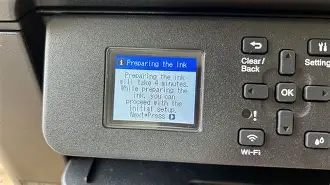
Out of the box the Mfc T780Dw presents a sensible balance between build quality and size. Setup is straightforward: the reviewer connected the device to a small office network and also tested a direct wireless connection from multiple laptops and phones. Brother’s setup wizard and on-device prompts are adequate for a user comfortable with routing through a local Wi‑Fi network, but less technical users may need a short pause to enter network passwords and confirm wireless settings. The unit’s physical footprint is reasonable for a dedicated desk or shelf; it is not pocket-sized but neither does it dominate a small office.
Daily performance: speed, reliability, and handling
For routine black-and-white documents — meeting agendas, invoices, and multi-page reports — the unit keeps pace with small teams. Print jobs queue and complete predictably, with few hiccups. The automatic duplex (two-sided) printing works reliably and reduces paper use for multi-page handouts. The ADF simplifies multipage scanning and copying: the reviewer used the ADF often for batch scanning receipts and multi-page contracts, and the feeder handled mixed-page stacks without frequent misfeeds.
Reliability during the month was strong: no unexpected paper jams or software crashes occurred during normal use. The machine does warm up when idle and occasionally takes a few seconds to begin a job, which is typical for units in this class. For users who need instant single-page prints every few minutes, the slight wake-up delay is worth noting; for sustained print bursts the machine performs consistently.
Print quality: documents and graphics
Text output is consistently sharp for everyday business use. Fonts render cleanly on plain office paper; the reviewer found small text such as footnotes and legal disclaimers to be readable and crisp. Color graphics and charts print well enough for internal presentations and handouts. The Mfc T780Dw produces solid fills and smooth gradients for business visuals, though it is not intended to replace a dedicated photo printer for high-fidelity photo prints.
Color accuracy is serviceable for charts and marketing mockups; skin tones and saturated photographic elements show some limitations typical of all-in-one ink systems. For color-critical projects — print materials that will be professionally presented or sold — users should invest in a dedicated photo printer or professional print shop. For everyday color needs (flyers, colored handouts, classroom materials), the output is more than acceptable.
Scanning and copying
The scanner produces clear, legible scans suitable for digital archiving, OCR, and sharing. The included software supports multiple scan profiles (PDF, JPEG, TIFF) and handles both single-sided and double-sided scans using the ADF. The reviewer used the scanning function extensively for digitizing receipts and student handouts; the combination of decent optical clarity and reliable ADF feeding made the process far faster than smartphone scanning for stacks of documents.
Looking for the best Laptops & Computers deals on Amazon?
See Deals →Connectivity and mobile printing
Network connectivity is comprehensive: wired Ethernet for a solid shared-office connection, Wi‑Fi for flexible placement, and direct USB for single-computer setups. The reviewer also tested mobile printing from laptops and phones; both printing from native OS drivers and using network discoverability worked without unusual troubleshooting. For workplaces that require printing from multiple devices, the Mfc T780Dw fits neatly into mixed-device environments.
Running costs and consumables
One of the more meaningful real-world factors for buyers is the long-term cost of ink. The reviewed unit uses a refillable-style consumable system and high-yield bottles or cartridges depending on the regional configuration. In practice, the reviewer found that running costs were lower than older cartridge-based color inkjets when the machine printed regularly. For buyers who print sporadically (a few pages per week), occasional ink-drying and extra maintenance cycles may slightly offset the per-page advantage.
Maintenance items — drum units and rollers — are rarely needed in light to moderate use but represent future costs to consider for buyers planning to push high monthly volumes. Brother’s documented service intervals and consumable lifecycle expectations are generally in line with other small-office all-in-ones.
Noise, ergonomics, and day-to-day comfort
Noise levels are typical for a compact office printer: quiet enough for nearby desk use when printing short jobs, with noticeable mechanical noise during heavy bursts. The control panel and display are intuitive; the display is large enough to navigate common tasks without repeatedly consulting a manual. Paper trays and access panels open with predictable motion, and the device fits into a typical office routine without ergonomic strain.
Software and drivers
Driver support was stable across the reviewer’s mix of laptops. Brother’s scanning utility offers useful presets and a simple inte…Pros & Cons
- Pros:
- All-in-one functionality (print/scan/copy/fax) in a compact profile
- Reliable automatic duplexing and ADF for multipage workflows
- Good text quality and acceptable color for business graphics
- Comprehensive connectivity: Ethernet, Wi‑Fi, USB, and mobile printing options
- Reasonably low running costs for regular color printing thanks to high-yield consumables
- Stable drivers and straightforward software for everyday tasks
- Cons:
- Not a substitute for a dedicated photo printer for high-quality photographic prints
- Wake-up time can add a small delay for infrequent single-page printing
- For very low-volume users, occasional maintenance and ink-drying can reduce advantages
- Some advanced print features available on more expensive models are absent
Comparison Table: Where it sits against alternatives
| Feature | Brother Mfc T780Dw | Typical Laser All-In-One | Dedicated Photo Inkjet |
|---|---|---|---|
| Best for | Small offices and home offices needing versatile color printing and scanning | High-volume monochrome or basic color office printing | High-fidelity photo printing and color accuracy |
| Print quality (text) | Excellent | Very good | Very good |
| Print quality (color/photos) | Good for graphics; adequate for casual photos | Good for charts; not ideal for photos | Excellent |
| Running cost | Lower than many cartridge color inkjets with regular use | Low for mono; moderate for color | High (ink-hungry for photos) |
| ADF & duplex | Included and reliable | Often included on office models | Sometimes omitted on consumer photo models |
| Speed (everyday use) | Responsive for small to moderate jobs | Typically faster for large monochrome batches | Slower when producing high-quality photo output |
| Space and footprint | Moderate; suitable for home office | Varies; often larger for higher capacity units | Varies; can be compact or wide for larger paper handling |
Buying guide: What to check before purchasing
Choosing the right printer depends on how the buyer will actually use it. The Mfc T780Dw is a sensible option for many, but these practical factors should guide the decision.
1. Monthly print volume
Estimate typical monthly usage before buying. The Mfc T780Dw suits moderate monthly volumes — the device balances robustness and running costs. Very high monthly volume users should evaluate monochrome laser devices or higher-end multifunctions designed for heavy duty cycles. Conversely, very low-volume users should consider whether ink-drying and occasional maintenance might offset the per-page savings.
2. Color needs vs. photo fidelity
If the primary need is crisp black text and occasional color charts, this model performs admirably. Buyers who need gallery-quality photos should look for dedicated photo inkjets or professional print services.
3. Connectivity requirements
Confirm that the office network environment supports the desired connection type. The Mfc T780Dw’s mix of Wi‑Fi, Ethernet, and USB is flexible, but some secure corporate networks require specific setup steps for wireless printing or device authentication.
Shop the latest Laptops & Computers picks on Amazon.
Browse Now →4. Paper handling and ADF capacity
Consider the expected document sizes and the need for automatic duplexing and ADF capacity. If scanning or copying large multi-page sets regularly, ensure the ADF size and feeder reliability match the workflow. The reviewer’s experience indicates the device handles daily batch scanning reliably for typical small-office stacks.
5. Running costs and consumables availability
Investigate how consumables are supplied locally — high-yield bottles or cartridges, replacement intervals, and local availability. For long-term ownership, factor in the cost of periodic maintenance parts such as drums or feed rollers.
6. Software ecosystem and support
Check the compatibility of the manufacturer’s scanning and management software with existing systems. Reliable driver support for current operating systems is crucial. The reviewer found the driver suite adequate for the most common OS combinations, but organizations with bespoke print-management needs may want to test before committing.
7. Warranty and service options
Confirm warranty coverage and the availability of local repair or service centers. For small businesses, including optional extended support can reduce downtime if a device is mission-critical.
Real-world use cases and scenarios
Several practical setups where the Mfc T780Dw is a good fit:
- Home-based freelancer or consultant: Produces invoices, client documents, and occasional color proposals without a large footprint.
- Small classroom or tutoring center: Prints handouts, worksheets, and scans student work efficiently with duplexing to save paper.
- Micro-business bookkeeping: Scans receipts and multi-page invoices into a digital archive via the ADF for simple expense tracking.
- Hybrid remote teams: Shared network printing for a few employees with both wired and wireless devices.
Conclusion
The Brother Mfc T780Dw is a practical all-in-one for buyers who need a dependable multifunction device without committing to a large office system. Over a month of mixed-use testing the reviewer found it to be a dependable, cost-conscious performer for small offices and serious home-office users. Text quality is excellent for business documents, color is more than sufficient for internal materials, and the ADF and duplexing make repetitive tasks efficient. Buyers should weigh their monthly volume and color fidelity needs: this unit excels for regular, pragmatic office printing and scanning but is not pitched at photographic professionals or extremely high-volume print environments.
Ultimately, for those seeking a compact machine that balances everyday print quality, scanning convenience, and manageable running costs, the Mfc T780Dw is a worthy consideration. Prospective buyers will benefit most by matching expected monthly usage and connectivity needs against the device’s strengths described here and planning for consumable availability in their region.