I Tested the Xbox Series S for a Month: Here is My Verdict
Introduction
The Xbox Series S arrived on the market as Microsoft's compact, budget-friendly entry into the current generation of consoles. Over the course of a month-long test period, the reviewer evaluated the console across real-world scenarios to determine whether it delivers meaningful value for typical buyers: casual players, those who subscribe to game subscriptions, families, and owners of smaller living spaces or secondary displays. This article breaks down design, performance, storage, ergonomics, and everyday usability, and offers a practical buying guide to help readers decide if the Series S is the right fit.
What the Series S Is (and Isn’t)
The Xbox Series S is a fully digital, disc-less console that targets 1440p gaming with the ability to upscale to 4K. It shares much of the same architectural DNA as the higher-end Series X—fast NVMe SSD storage, hardware-accelerated DirectX Raytracing, and the Xbox Velocity Architecture—but at reduced GPU and storage capacity. In practice, that trade-off translates to a lower price, smaller footprint, and constraints that matter to different classes of buyers in different ways.
Design and Build
Size, Weight, and Aesthetics
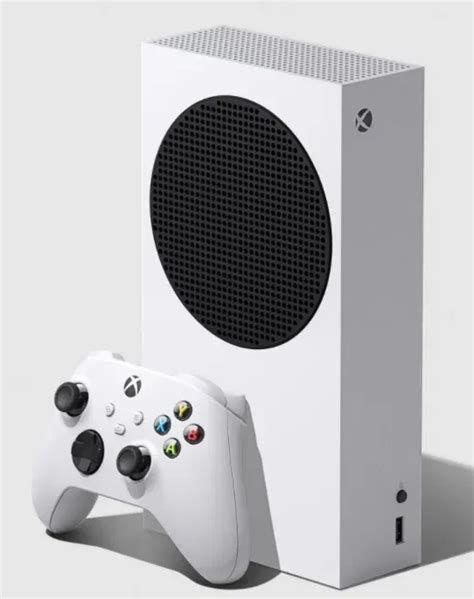
The Series S is strikingly compact. The reviewer noted it fits comfortably on small shelves, in entertainment cabinets, or atop a desk without dominating the space. The white matte finish with subtle Xbox branding keeps the look understated. The console's small size is its primary physical selling point: it sacrifices optical drive functionality and raw GPU power for a footprint that suits minimalist setups and multi-device households.
Ports and Connectivity
On the back, the Series S includes an HDMI 2.1 output, one USB-A port (rear), Ethernet, and the power input; there is a front USB-A port for accessories. Wireless connectivity (Wi‑Fi 5 on original models; newer firmware and hardware iterations may vary) supports online play and streaming. Buyers who rely on multiple wired accessories or external storage may need a powered USB hub or to choose peripherals carefully, as the port selection is intentionally modest.
Performance and Hardware Analysis
CPU and GPU
The Series S uses the same Zen 2-based CPU design as the Series X but with fewer compute units in the GPU. This results in excellent CPU-bound performance for many titles while limiting raw rasterization and raytracing performance compared to the flagship model. The reviewer found that many multiplatform titles run smoothly at 60 frames per second on 1080p and 1440p displays, with dynamic scaling used to maintain framerate.
Storage and Load Times
With a 512GB NVMe SSD (the usable space is smaller after the OS), load times are dramatically faster than previous-generation spinning-disk consoles. The reviewer observed near-instant level loads in supported titles and fast resume across multiple games—one of the most tangible quality-of-life improvements. However, the limited capacity means storage management becomes a practical concern after installing a few modern AAA games.
Resolution, Upscaling, and Visuals
Microsoft positions the Series S for 1440p gaming with dynamic upscaling to 4K. In the reviewer’s experience, that approach is sensible for the console’s hardware class: textures, post-processing, and raytracing effects are generally scaled back to hit higher framerates, and many games offer a “performance” mode (favoring framerate) and a “quality” mode (favoring resolution and effects). On a 4K TV, the upscaled image looks good for casual viewing, but discerning players with large 4K displays may prefer the Series X or a PC to get native 4K fidelity consistently.
Real-World Gaming Experience
Across genres—single-player narrative games, open-world titles, racing, and competitive multiplayer—the Series S offered a consistently enjoyable experience. Competitive players on high-refresh PC monitors may be limited by the console’s maximum practical framerate in many titles, but casual and console-focused players will find responsiveness and visuals acceptable. The reviewer highlighted smooth frame pacing, reliable party and voice chat via the Xbox ecosystem, and stable online multiplayer sessions during the test.
Looking for the best Electronics deals on Amazon?
View Offers →Backwards Compatibility and Game Library
Backwards compatibility is a strong point: many Xbox One and select Xbox 360 and original Xbox games run on the Series S with enhancements like faster loading and smoother frame rates. The console’s digital-only nature pairs well with subscription services that provide broad libraries of downloadable titles. This makes the Series S especially appealing as a Game Pass-first device, where ownership of large libraries reduces the pressure to store many installed titles at once—although installed-game storage remains a limiting factor.
Storage and Expandability
Out of the box, usable storage is limited once the system software and updates are accounted for. The reviewer installed two AAA titles and a few smaller games before needing to manage space. Ways to manage storage include uninstalling and reinstalling as needed, using external USB drives for backward-compatible titles, or purchasing a proprietary expansion card that matches the internal SSD’s speed for seamless next-gen performance. Buyers should plan for additional storage investment if they anticipate playing several modern AAA titles concurrently.
Noise, Heat, and Power
The compact design includes a fan and ventilation that keep temperatures within acceptable operating ranges during long play ses…Controller, Accessories, and Ecosystem
The included Xbox Wireless Controller is comfortable and familiar. The controller pairs reliably and supports Bluetooth for use with mobile devices and PCs. The reviewer emphasized that accessories—additional controllers, headsets, or specialized mounts—are straightforward to integrate. For players who prefer physical media, it’s important to note that the Series S lacks an optical drive, which affects those with disc-only libraries or who buy physical copies.
Media and Non-Gaming Use Cases
As a streaming device, the Series S performs admirably. It runs popular streaming apps and handles media playback smoothly, making it a viable all-in-one living-room device for households that want gaming and TV apps on a single box. The disc-less design and compact size also make the Series S a good secondary console for bedrooms, dorms, or travel where space and portability matter more than the highest graphical fidelity.
Pros & Cons
- Pros:
- Compact design fits small setups and secondary displays.
- Fast NVMe SSD delivers short load times and quick resume.
- Lower price makes next-gen access more attainable.
- Great fit for subscription-driven libraries (digital-first players).
- Quiet operation and modest power draw for a modern console.
- Cons:
- Limited internal storage requires frequent management or extra purchases.
- Disc-less format excludes physical game owners and collectors.
- Lower GPU power means compromises in native 4K and raytracing fidelity.
- Fewer ports may be restrictive for accessory-heavy setups.
Comparison: Xbox Series S vs Series X vs Competing Consoles
| Model | Target Resolution | Storage (approx) | Optical Drive | Performance Fit | Best For |
|---|---|---|---|---|---|
| Xbox Series S | 1440p (upscales to 4K) | 512GB NVMe (usable smaller) | No | Good for 60fps at 1080p/1440p; lower raytracing settings | Budget-conscious, digital-first, small spaces, Game Pass subscribers |
| Xbox Series X | Native 4K | 1TB NVMe (usable smaller) | Yes | High-end console performance; stronger raytracing | Players who want native 4K, disc collectors, power users |
| Competing Digital Console (e.g., other brand) | Varies (some aim at 4K) | Varies | Depends | Performance varies; some favor exclusive titles | Buyers focused on exclusive ecosystems or specific features |
Buying Guide: Who Should Consider the Series S and Why
When evaluating whether to buy a Series S, buyers should weigh several practical considerations that influence day-to-day satisfaction.
Use Case: Casual, Digital-First Players
For players who value affordability, want a smooth next-gen experience without chasing the highest fidelity, and primarily access games through digital storefronts or subscription services, the Series S is an appealing option. The smaller SSD is less of a problem for players who cycle through subscription libraries rather than hoarding multiple multi-hundred-gigabyte installs.
Looking for the best Electronics deals on Amazon?
Shop Amazon →Use Case: Secondary Console or Small-Space Setup
Families or individuals who want a secondary console for a bedroom, dorm, or smaller living room will appreciate the Series S footprint. It pairs well with smaller TVs or 1440p monitors and is easy to move between locations if necessary.
Use Case: Budget-Conscious Gamers
Buyers on a strict budget who want access to current-gen titles and fast load times will find excellent value in the Series S—particularly when paired with a subscription that grants an extensive library.
When to Choose Something Else
Buyers who require native 4K, collect physical games, want the most future-proof GPU performance, or who frequently play multiple AAA games concurrently without uninstalling will likely prefer the Series X or a high-end gaming PC. Also, those who rely on a large local library will need to plan for expanded storage costs.
Key Purchase Considerations
- Display: If the buyer owns a 4K TV and prioritizes native 4K visuals, the Series X is more suitable. For 1080p or 1440p displays, the Series S performs very well.
- Storage Plan: Consider budget for a compatible expansion card or an external drive for older-gen titles. Factor in the practical usable storage rather than the headline number.
- Game Library: Digital libraries and subscription services reduce storage pressure and make the disc-less design less of a limitation.
- Connectivity: Check router placement and Wi-Fi performance for downloading large games; Ethernet remains the most reliable option for online multiplayer.
- Accessories: An extra controller, a headset, and a fast USB external SSD for non-optimized games can meaningfully improve convenience.
- Future-Proofing: If maximum longevity and fidelity are priorities, invest more in a higher-spec device.
Setup and Practical Tips
- Place the console in a well-ventilated spot—compact size doesn't eliminate heat generation.
- Sign up for a game subscription service if the goal is breadth of games without buying each title.
- Manage storage proactively: uninstall completed titles, use an external drive for older games, and prioritize an expansion solution for the latest releases.
- Use the console’s power-saving settings to minimize background downloads and reduce energy use if desired.
- Keep the controller firmware up to date through the console settings for best compatibility and latency improvements.
Conclusion
After a month of mixed-use testing—spanning single-player, multiplayer, streaming, and household scenarios—the Xbox Series S emerges as a well-considered compromise: it brings many of the most meaningful next-gen improvements (dramatically reduced load times, faster resume, and a modern development platform) in a compact, lower-cost package. It is particularly compelling for digital-first players, subscribers to large game libraries, and people with limited space or those seeking a secondary console.
However, the console's small storage footprint, lack of an optical drive, and reduced GPU headroom are real trade-offs. Buyers should evaluate how much they value native 4K, physical media, and local storage before committing. For many, the Series S represents smart value—a practical way to enter the current generation without paying for capabilities they may never use. For those who need the highest fidelity and future-proofing, stepping up to a higher-tier model will be the better long-term investment.